
How Often Should You Cut Curly Hair?
Wenzel Salon is Ouidad Certified, which means our stylists train in a curl-specific cutting method built around the way curls actually grow. That certification shapes one of the most common questions we hear from curly clients around Springfield: how often to cut curly hair without losing the shape you love.
If your curls have started to feel stretched, weighed down, or knotty at the ends, you are already reading the signs. The useful part is knowing what those signs mean and what a healthy trim schedule looks like for your hair, so you can plan around it instead of guessing.
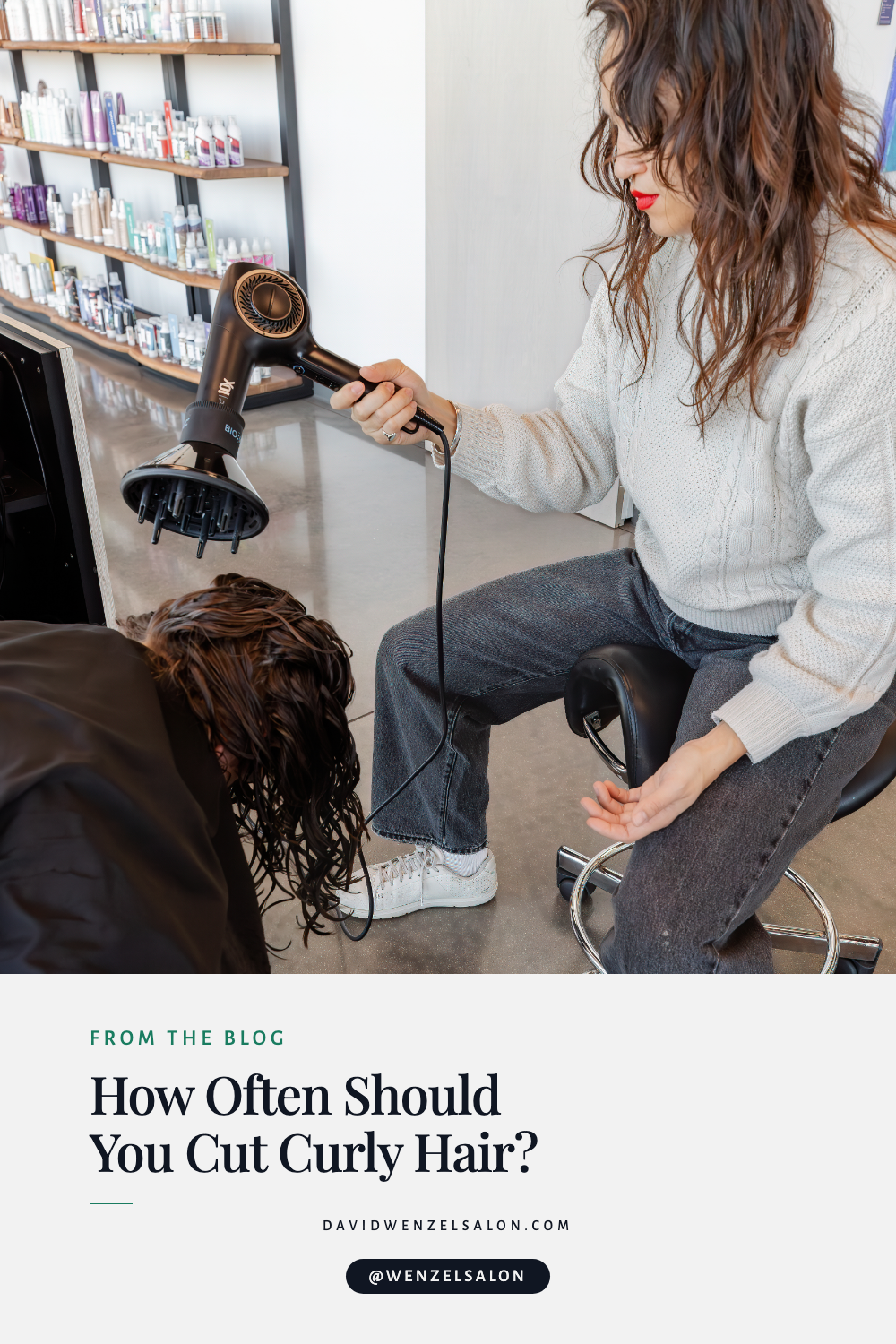
How Often to Cut Curly Hair
For most curly hair, a trim every six to eight weeks keeps the shape looking intentional and the ends healthy. If your hair is color-treated or regularly heat-styled, closer to every four to six weeks tends to serve it better, because color and heat leave the strand more fragile and quicker to fray at the ends. The American Academy of Dermatology lists heat and chemical processing among the most common sources of everyday hair damage, which is why treated curls ask for a slightly shorter window.
The clearest cue is not the calendar, though. It is your ends. When your curls start to knot easily, tangle where they used to slip apart, or catch on themselves as you detangle, that is your hair telling you it is due. Ouidad, the method we are certified in, puts it plainly in its rules for cutting curly hair: knots mean it is time.
Because curls coil, they also hide length. A trim that clears half an inch of frayed end looks far gentler on curly hair than the same half inch would on straight hair, since the curl springs back and disguises what came off. Staying on schedule rarely costs you the length you have been growing, and it usually makes what you have look fuller.
Why Regular Trims Protect Your Curl Shape
Curls hold their pattern from the ends up. When the ends split and thin out, the curl loses the little bit of weight it needs to spring, and it starts to read as stretched or limp instead of round and full. A worn-out end also frizzes first, which is why hair can feel drier and harder to define in the weeks right before a trim is due.
You will often feel the change before you see it. Single-strand knots, the tiny tangles that form when one curl loops back on itself, tend to show up first at the very ends, along with ends that catch during a shower detangle. None of this means your hair is unhealthy. It is simply the oldest hair, the part that has been through the most washing and weather, letting you know it is ready to go.
A split end does not repair itself. Once a strand frays, the split travels up the shaft over time, so a small trim on schedule actually protects your length rather than costing it. If frizz is your main worry between cuts, our guide to calming curly hair frizz in Springfield covers the day-to-day side of keeping those ends smooth.
What to Expect at a Curl Trim
Curls are cut damp, not dry, so your stylist can see your true curl pattern before any length comes off. Dry curls hide where the weight really falls, and damp curls show it. From there the cut follows the Ouidad Carve and Slice approach, which removes bulk from the interior so your curls nest together like puzzle pieces instead of stacking into a triangle.
Not every visit is a big change. Some appointments are a light dusting that clears the frayed ends and resets the pattern. Others create a fuller shape when you are ready to change your length or layers. The cut is shaped around your curl pattern so it looks balanced once your hair dries and springs back into place.
A curly hair trim in Springfield, MO, starts with a conversation about your pattern, density, and how you wear it each day. Ouidad even encourages curly clients to look at a stylist's curl work and ask about their technique, and we welcome that. If you are newer to curl-specific cutting, our curly hair salon guide for Springfield walks through what the method looks like in the chair.
How to Stretch the Time Between Trims
Good care between appointments is what keeps you on the longer end of that six to eight week window. Curls stay defined longest when the ends stay moisturized and undisturbed, so a weekly deep conditioner, a satin pillowcase, and gentle detangling on damp hair with plenty of slip all help your shape hold. Our everyday curl care routine lays out a simple version you can actually keep up with.
It also helps to be gentle with the ends specifically. Rough towel-drying, tight elastics, and detangling on dry hair all wear the oldest hair down faster, so a soft microfiber towel and finger-detangling with conditioner in the shower buy your shape a little more time. Small habits at the ends are what turn a six week window into an eight week one.
Springfield summers make this matter a little more. By August, the humidity pulls moisture in and out of the hair all day, and worn ends swell and frizz faster than fresh ones. If you are driving in from Nixa or Ozark, keeping to that six to eight week rhythm saves you a second trip once your curls start to lose their shape.
Your curls do their best work when the shape underneath is healthy, and a trim on the right schedule is the quiet thing that keeps them there. If it has been longer than eight weeks and your ends are starting to knot, this is your sign to book that appointment you have been putting off.
You Might Also Like
What makes a curly haircut in Springfield different
An everyday curl care routine that actually holds
How to calm curly hair frizz in Springfield
Book your curl trim at Wenzel Salon